



How AI Data Centers Can Go From Villain to Hero with Varun Sivaram
Description
“Everyone hates data centers.”
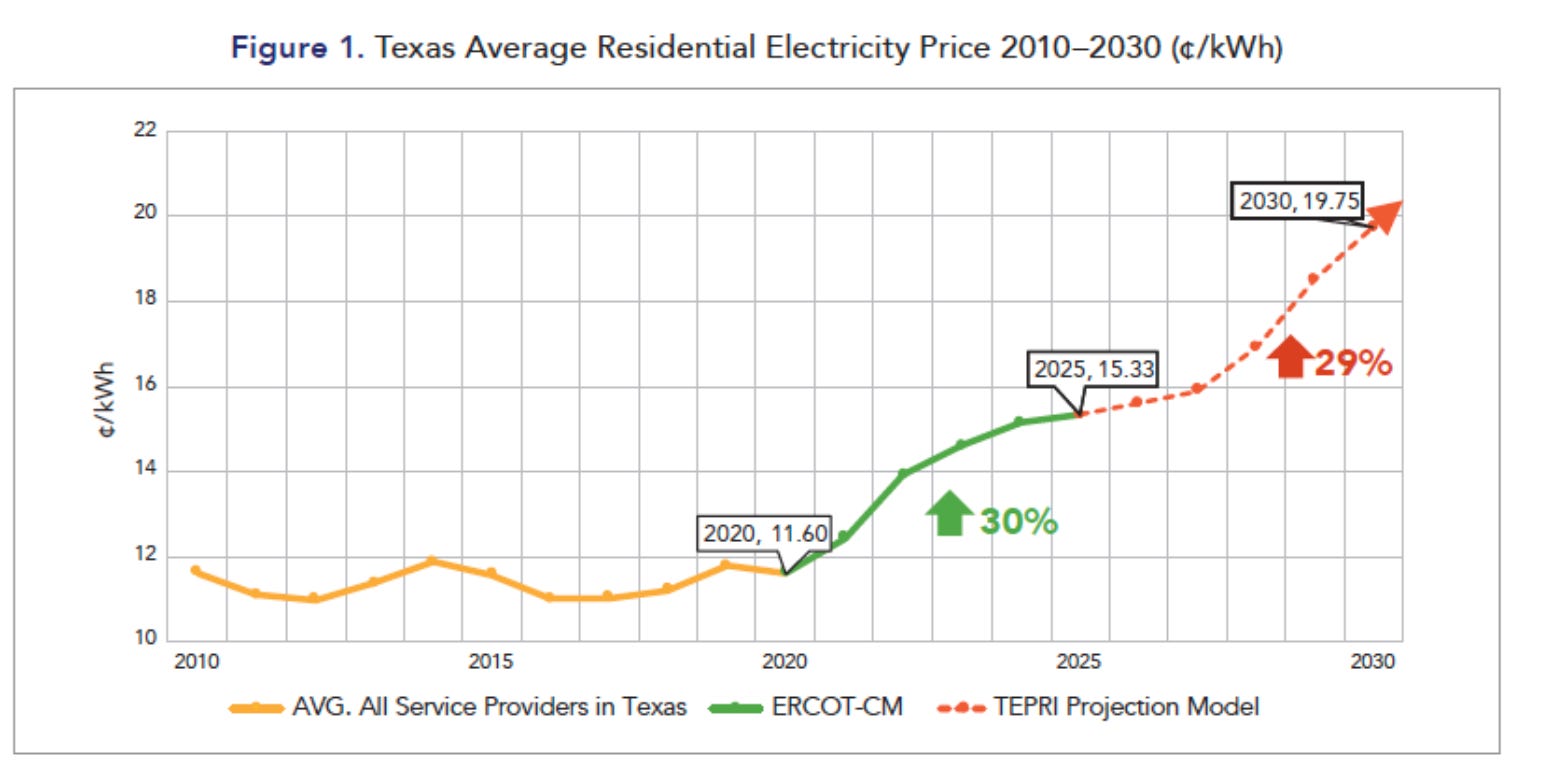
That was the subject line on the email newsletter from Heatmap Daily the day before I sat down with Dr. Varun Sivaram, co-founder and CEO of Emerald AI. Communities see huge new loads coming onto the grid, hear about billions in new infrastructure, and worry that their bills will go up.
It doesn’t have to work that way.
Varun argues there are two paths. On the villain path, AI data centers drive up power bills and increase the likelihood of outages. On the hero path, they become flexible grid assets that help us use existing capacity better, absorb much of the cost of new grid infrastructure, and help residential and small commercial customers pay for distributed batteries, heat pumps, and more.
Texas and ERCOT are at that fork in the road.
Two futures for AI data centers
Varun calls this a “critical juncture.” If ratepayers have to pay more and grid reliability takes a hit, communities start pushing projects away and the U.S. falls behind in the global AI race
The alternative is the hero path, where data centers show up as flexible partners:
Data centers in this hero path are going to contribute to grid reliability and help us to avoid rolling blackouts. I think we can get there, but we’re not on that path right now and folks are right to worry. And this is the moment where we switch from the villain to the hero.
Texas has a chance to innovate — both technologically and with policy. Regulatory innovation is as important as technological innovation — maybe more so.
Turning AI load into flexibility
Emerald AI is a software layer that makes AI workloads flexible. Varun breaks it down into four kinds of flexibility:
* Temporal. Once you know what can move, you can shift it in time. Training a big model at 6 p.m., when ERCOT is tight, is very different than running it at 2 a.m. when prices are low and resources are abundant.
* Spatial. Many jobs can move across locations. If a Texas node is stressed and another region is fine, traffic can be shifted without changing the user experience.
* Resource. Some tasks truly need instant answers, others can wait minutes, hours, or days. Emerald deploys and optimizes onsite resources when necessary.
* Adjacent. Data centers can purchase flexibility — putting money into the pockets of residential and small commercial customers — from distributed batteries, HVAC systems, and other controllable equipment.
Put together, these layers make a data center behave less like a rigid block of demand and more like a flexible grid asset when conditions require it.
The Energy Capital Podcast is a reader-supported publication. To receive new posts and support my work, consider becoming a free or paid subscriber.
ERCOT’s stakes and the Texas choice
Varun shared a conversation with ERCOT CEO Pablo Vegas. Vegas said he did not just want a tool that jumps in during emergencies. He wanted something that keeps the grid from getting to an emergency. Don’t want for the flashing red lights; have data centers contribute flexibility when the lights are flashing yellow.
That is the heart of the hero path.
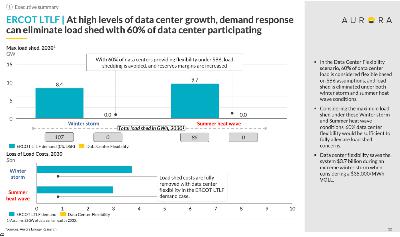
ERCOT was already dealing with intense load growth from industrial projects, crypto-miners, traditional data centers, increasing population, hotter temperatures, and now AI data centers. Texans will not accept anything less than high reliability and lower bills. If the PUC and ERCOT treat AI as inflexible, we will need to build a lot more capacity and infrastructure than we might otherwise need.
If we require and reward flexibility, we can serve more load at lower cost, then add new infrastructure when truly needed.
Final Thoughts
The hardware and software inside AI data centers means they are already some of the most controllable loads connected to the system. With the right tools, incentives, and market structures, AI factories can act as shock absorbers instead of stress multipliers.
Texas leads on gas. Texas leads on wind. Texas leads on solar and storage. We can also lead on making AI an ally to the grid, not a villain. That will take work but it is possible. It’s a choice we can make.
If you enjoyed this podcast, please share it with a friend or colleague or family member or neighbor. The more Texans engage with these decisions, the better chance we have for a grid that is reliable, affordable, and cleaner for everyone.
Timestamps:
* 00:00 – Intro, Varun bio, Emerald AI
* 02:15 – The villain and hero paths for AI data centers
* 05:30 – Phoenix pilot as a tangible example of the hero path
* 09:00 – California simulation of 2020 outages
* 10:00 – Possibility of doing a pilot in ERCOT, Pablo Vegas’s comments
* 12:00 – What exactly does EmeraldAI do?
* 14:00 – Breaking down four flexibilities: temporal, spatial, onsite resource flexibility, adjacent
* 20:00 – Emerald AI’s focus is on onsite flexibility
* 24:00 – Real-world stress test results
* 27:00 – What excites Varun about AI
* 32:00 – How AI can help lower power bills: the central tenet of the hero path
* 36:00 – Why ERCOT is potentially the global model for speed to power
* 40:00 – Connect-and-manage for loads
* 43:00 – A reference design for AI factories from a pilot in Virginia
* 46:30 – The hero and villain path for AI and emissions
* 49:00 – Optimizing the system to buy time until nuclear, geothermal, etc. are ready
* 51:30 – Getting a win-win-win: on affordability, on AI innovation, and sustainable, reliable systems
* 52:30 – Final thoughts: the Emerald AI team
Resources:
Host, Guest & Company• Varun Sivaram - Linkedin • EmeraldAI - LinkedIn• Doug Lewin - LinkedIn, Twitter(X), Bluesky, & YouTube
Company News• Sharing Our Seed Extension - Press Release• National Grid and Emerald AI announce strategic partnership - Press Release• How AI Factories Can Help Relieve Grid Stress - Press Release
Books & Articles •The Worlds I See: Curiosity, Exploration, and Discovery at the Dawn of AI by Dr. Fei-Fei Li•The Country’s Biggest Grid Has a Plan to Manage Data Centers’ Power Use. Everyone Hates It. - Heatmap News •The mechanics of data center flexibility - Catalyst Podcast (Latitude Media) •How the world’s first flexible AI factory will work in tandem with the grid by Arushi Sharma Frank in Latitude MediaPolicy & Reports • Report on disorganized integration of data centers - Texas Reliability Entity • 2025 State of Reliability - NERC• The Worlds I See - Dr. Fei-Fei Li• Arushi Sharma Frank’s ERCOT Planning Guide Revision Request• Retail Electricity Price and Cost Trends: 2024 - Lawrence Berkeley Labs• Rethinking Load Growth - Tyler Norris and Duke University• ANOPR on Large Load Interconnection - FERC• Emerald AI: presentation to ERCOT Large Flexible Load Task Force • PGGR 135: Large Load Interconnection Queue Process Revisi






 United States
