


Here Comes the Sun: Bill McKibben on Solar’s Breakout Moment
Description
Sometimes I get to bring you a conversation that really feels like a turning point.
This week, I sat down with Bill McKibben, one of the most respected voices in climate and energy. His new book, Here Comes the Sun (out today! order it here), is different from his earlier work. Bill has long been known for sounding the alarm. But this time, he’s bringing something else: optimism.
Why? Because solar and other clean technologies are no longer “someday.” They are scaling now — all around the world — faster than anyone predicted.
Solar’s Exponential Takeoff
In 2009, The Economist predicted it would take 20 years for solar to scale up by an order of magnitude.
It took six.
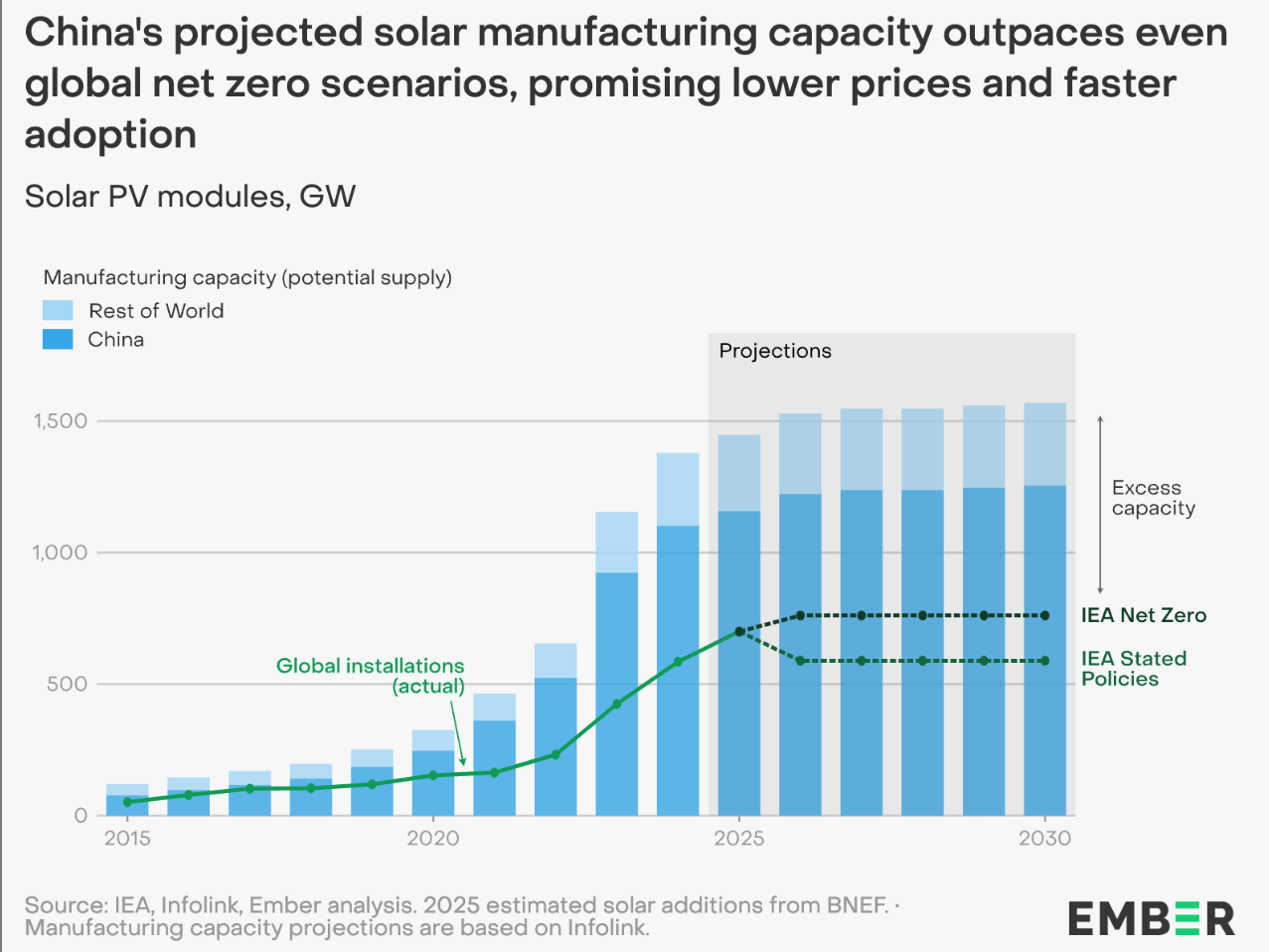
Today, the world installs 230–240 gigawatts of solar every six months. That’s two massive coal plants’ worth of clean energy every single day.
This isn’t fringe. This isn’t boutique. It’s mainstream power.
Think Costco, not Whole Foods. Bulk, cheap, ready-to-go.
Everywhere from Pakistan to Texas: A Global Story
The shift is happening everywhere.
* In Pakistan, rooftop solar grew so fast that in just 8 months, citizens built the equivalent of half their national grid. Farmers led the way, cutting diesel use by 35 percent in a single year.
* In Texas, oil and gas operators in the Permian are connecting to the grid or tapping wind and solar because it is cheaper than running diesel generators.
When energy is more affordable, more reliable, and easier to deploy, people adopt it. That is true from Karachi to the Concho Valley.
The Texas Energy and Power Newsletter is a reader-supported publication. To receive new posts and support my work, consider becoming a free or paid subscriber.
No Longer “Alternative Energy”
We’ve used the phrase “alternative energy” for wind and solar for decades. Now it means something different: natural gas and coal are the alternatives and renewables + storage are the most common, even dominant, resources.
Last year, 90% of new power plants built worldwide were clean energy.
Oil and gas remain vital and will continue to play an important role, but the growth is in clean energy.
Leading With People’s Needs, Not Just Climate
Here’s the pivot that excites me most.
If we lead with “climate crisis,” people shut down. Either they don’t agree it’s happening and check out, or they get it and feel depressed and stressed out.
But if we lead with better lives and lower bills, people listen:
* Half of Texans report they are choosing between food, medicine, and electricity. Renewables lower costs.
* EVs aren’t sacrifices. They are smoother, faster, and cheaper to fuel.
* Heat pumps aren’t compromises. They reduce stress on the grid, make homes more comfortable, and lower consumers’ energy bills.
When we talk about clean energy in terms of savings and resilience, people connect. And those benefits also happen to reduce emissions.
This is not about jerseys or tribes. It’s about abundance.
Land, Liberty, and Local Benefits
Opponents often argue renewables take up too much land. But the math tells a different story:
* 1 acre of corn for ethanol → fuels an F-150 for ~25,000 miles.
* 1 acre of solar panels → powers an F-150 Lightning for 700,000 miles.
That’s not even close.
And the benefits are tangible:
* Ranchers and farmers are keeping land in the family thanks to wind and solar leases.
* Rural schools are funded by clean energy tax revenue.
* Cattle graze happily under turbines, even using them for shade.
This is energy independence at the community level — red state, blue state, doesn’t matter.
A Race Between Challenge and Opportunity
We’re living two stories at once:
* Bad News: By June 2023, Earth had entered the hottest 12-month stretch in 125,000 years.
* Good News: That same month, humanity began installing over a gigawatt of solar per day.
The race is on. The question is not if we transition. It’s how fast.
The outcome depends on how quickly we build. We now have the tools to create cleaner, cheaper, and more reliable power. The question is whether we will use them fast enough.
Bill put it bluntly: “We can’t stop global warming. But we can stop it short of breaking civilization.”
Why Policy Still Matters
The economics are overwhelming, but politics can slow things down.
* Texas became a leader in wind power because of transmission investments made two decades ago.
* The oil and gas industry poured $500 million into lobbying and ads last year.
* Rooftop solar in the U.S. still takes months to permit, compared to days in places like Australia.
* And yet, local politics in Texas are shifting as communities fight for renewables that pay their bills.
This is where action, at the state and local level, can accelerate the inevitable.
The lesson is clear: smart policy can clear barriers so Texans can benefit sooner.
The Moment
After 700,000 years of burning things for fuel, humanity is finally learning to power itself directly from the sun.
That’s not just about climate. It’s about freedom, prosperity, and better technology.
Bill McKibben’s new book, Here Comes the Sun, captures this moment with story after story of how fast change is happening. It’s out now, and I can’t recommend it highly enough.
He’s also helping organize a national day of action called Sunday on September 21st. Learn more at sunday.earth.
If you got value from this, please share it with a friend, colleague, or family member and consider subscribing. The more people who see clean energy for what it is, the future, the faster we’ll build it.
Transcript
* 00:00 – Introduction
* 02:30 – Why Bill is uncharacteristically optimistic
* 04:30 – Very few people understand how much progress has been made: renewables are no longer “alternative”
* 8:00 – The story of Pakistan’s solar surge
* 11:00 – We’re in a different world because from steep learning curves for renewables and storage
* 14:00 – Energy as a service instead of a commodity
* 17:00 – Is the oil and gas industry getting what they wanted out of President Trump?
* 20:00 – China is adopting clean energy and dominating those industries
* 23:00 – Why leading with climate change is not a leading strategy
* 26:00 – Leading with benefits of new technologies in this “epochal moment”
* 29:00 – Not everyone can strike oil, but everyone can strike wind or sun (or both)
* 30:00 – Agrivoltaics: “shade is a valuable commodity”
* 34:00 – Sun Day: September 21
* 37:30 – June 2023: hottest month on record to that point AND first month when world installed one gigawatt per day
* 39:30 – Is it time for progressives to embrace permitting reform?
* 43:00 – Is progress more likely at federal or state & local levels?
* 48:30 – Closing Thoughts & Call to Action
Resources
Bill McKibben’s Work
* Book: Here Comes the Sun by Bill McKibben - (new release on the global solar revolution, packed with stories and stats).
* Substack: The Crucial Years: Bill’s ongoing essays on climate, energy, and activism.
* Sun Day! On the equinox: September 21
Articles and Essays Referenced
* The New Yorker (2025): Published an excerpt from Here Comes the Sun, surprising even seasoned climate experts with how fast solar is scaling.
* Telegraph article on Texas, including John Davis, former Texas Republican legislator, who said he “struck wind” on his Menard ranch — wind leases now account for 40% of his income.
* Mother Jones. Yes in Our Backyards — why it takes months in the U.S. but days in Australia.
* Dallas Federal Reserve Quarterly Survey: Candid insights from Texas oil and gas executives on drilling economics and policy.
Global and National Examples
* <a href="https://www.volts.wtf/p/pakistans-solar-boom?utm






 United States
