


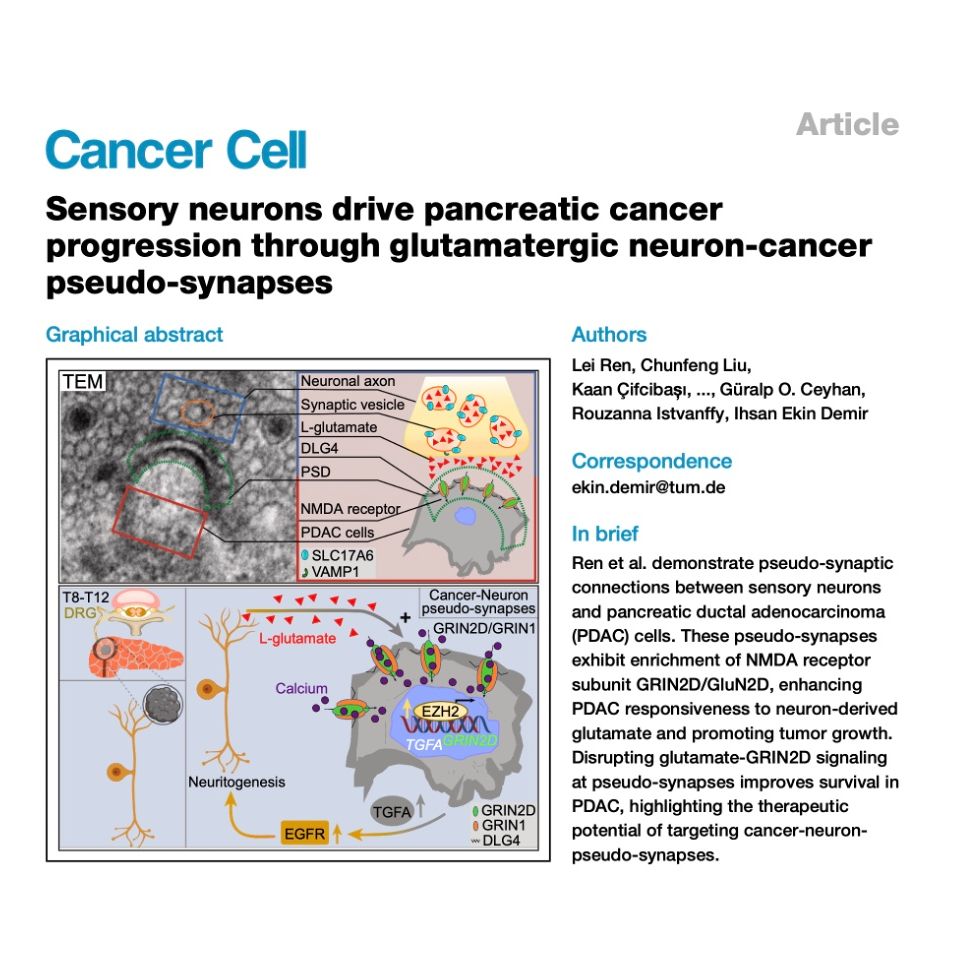
304-Neuronal Glutamate Signaling Hijacks Pancreatic Cancer
Update: 2025-12-08
Description
The research investigates a novel mechanism driving the progression of pancreatic ductal adenocarcinoma (PDAC) by demonstrating the presence of glutamatergic neuron-cancer pseudo-synapses between sensory nerve endings and cancer cells. This mechanism centers on the cancer cells' selective enrichment of the NMDA receptor subunit GRIN2D at the pseudo-synaptic sites, making them sensitive to neuron-derived glutamate. Activation of this glutamate-GRIN2D signaling pathway establishes a detrimental feedforward loop that significantly promotes tumor growth, invasiveness, and increased innervation in the pancreas. Furthermore, the study identifies that the loss of GRIN2D expression in cancer cells hinders tumorigenesis by suppressing the TGFA-EGFR signaling axis. Crucially, interfering with this glutamate-GRIN2D pathway dramatically enhanced survival in murine models, highlighting these peripheral cancer-neuron pseudo-synapses as a potential target for new oncological therapies.
References:
- Ren L, Liu C, Çifcibaşı K, et al. Sensory neurons drive pancreatic cancer progression through glutamatergic neuron-cancer pseudo-synapses[J]. Cancer cell, 2025.

Comments
In Channel





Download from Google Play

Download from App Store
 United States
00:00
00:00
x

