


309-Amazonia's Wild Meat: Nutritional Lifeline and Decline
Update: 2025-12-11
Description
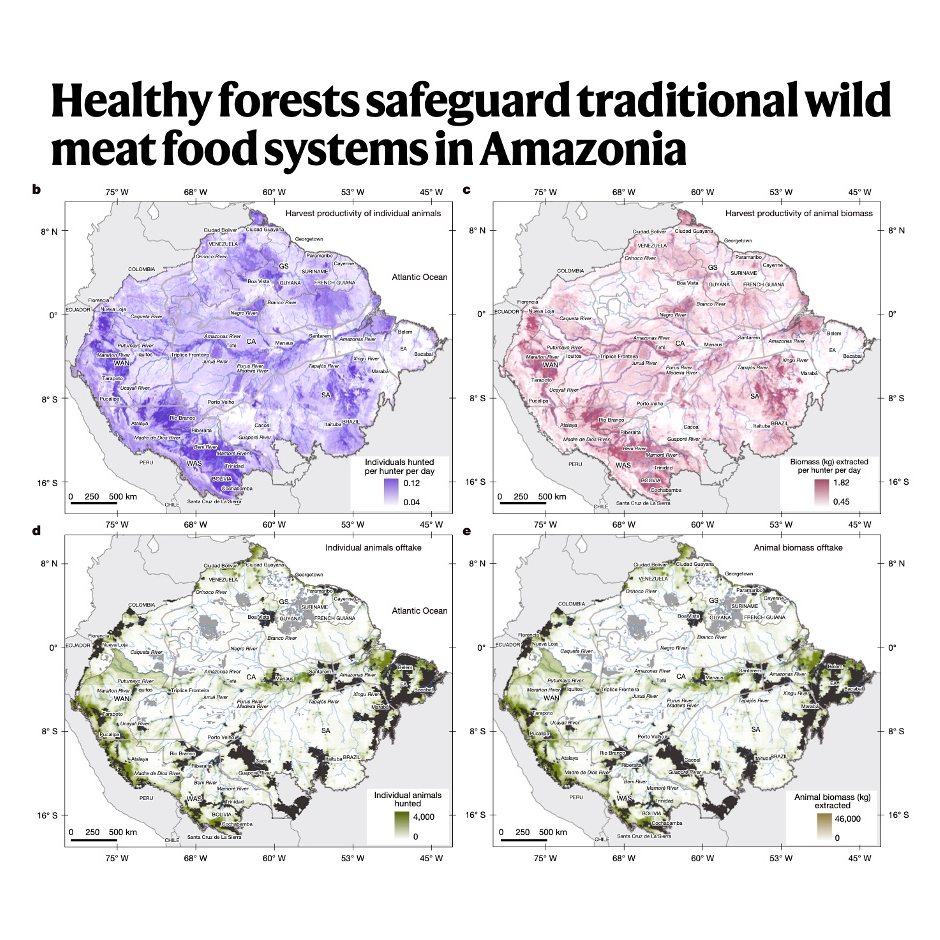
The research utilizes an extensive dataset of animal harvests across 625 rural Amazonian localities to quantify the critical role of wild meat in sustaining the region's inhabitants. The study estimates that approximately 0.34 million metric tons of edible wild meat are extracted annually, supplying nearly half of the required daily intake of protein and iron, along with essential B vitamins, for over 10 million rural Amazonian peoples. This traditional food system, which relies heavily on mammals like peccaries and large rodents, is shown to be severely threatened by human-driven environmental pressures. Specifically, the availability of wild meat decreases drastically in areas experiencing extensive deforestation, higher human populations, and proximity to urban centers. The authors conclude that protecting the health and integrity of the Amazonian forest is paramount not only for biodiversity conservation but also for safeguarding the nutritional security and cultural autonomy of Indigenous and traditional communities.
References:
- Antunes A P, de Araujo Lima Constantino P, Fa J E, et al. Healthy forests safeguard traditional wild meat food systems in Amazonia[J]. Nature, 2025: 1-9.

Comments
In Channel




Download from Google Play

Download from App Store
 United States
00:00
00:00
x

