


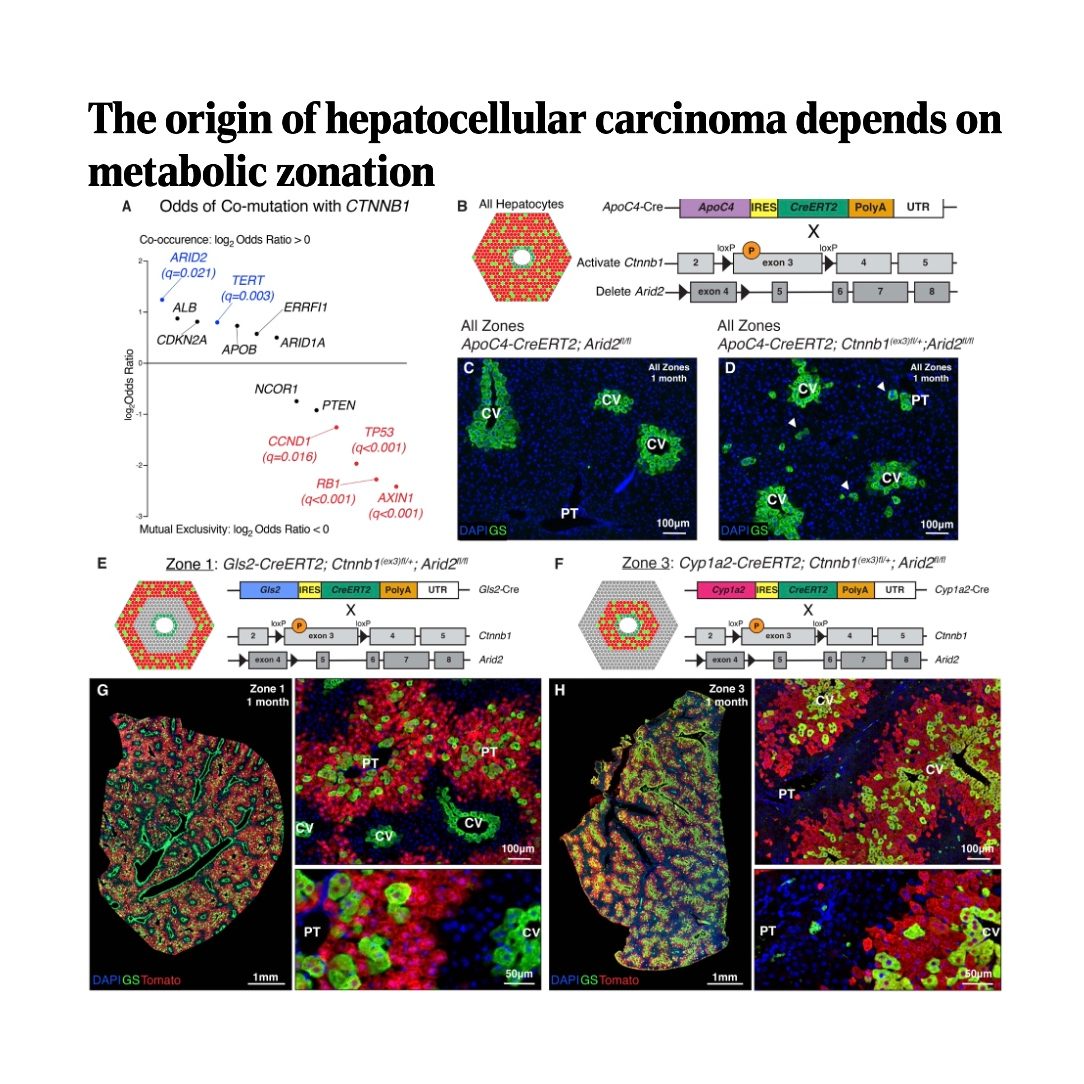
321-Hepatic Zonation Dictates Cancer Initiation
Update: 2025-12-17
Description
This research article explores the non-uniform susceptibility of the liver to cancer, demonstrating that the origin of hepatocellular carcinoma (HCC) is dependent on metabolic zonation. Using mouse models with common HCC driver mutations (Ctnnb1 and Arid2), the authors found that pre-malignant cell clones persisted in Zone 1 but shrank in Zone 3, yet tumors developed far more frequently in Zone 3. This unexpected finding suggests that the size of premalignant clonal expansion is not predictive of ultimate cancer risk. Mechanistically, the study identified that zone 3's bias toward tumorigenesis is linked to the high zonal expression of Gstm2 and Gstm3 proteins. These proteins facilitate tumor initiation by protecting the mutated hepatocytes from ferroptosis, a form of oxidative cell death, revealing a zone-specific metabolic vulnerability for future therapeutic intervention.
References:
- Guo J, Liang R, Chung A, et al. The origin of hepatocellular carcinoma depends on metabolic zonation[J]. Science, 2025: eadv7129.

Comments
In Channel




Download from Google Play

Download from App Store
 United States
00:00
00:00
x

