


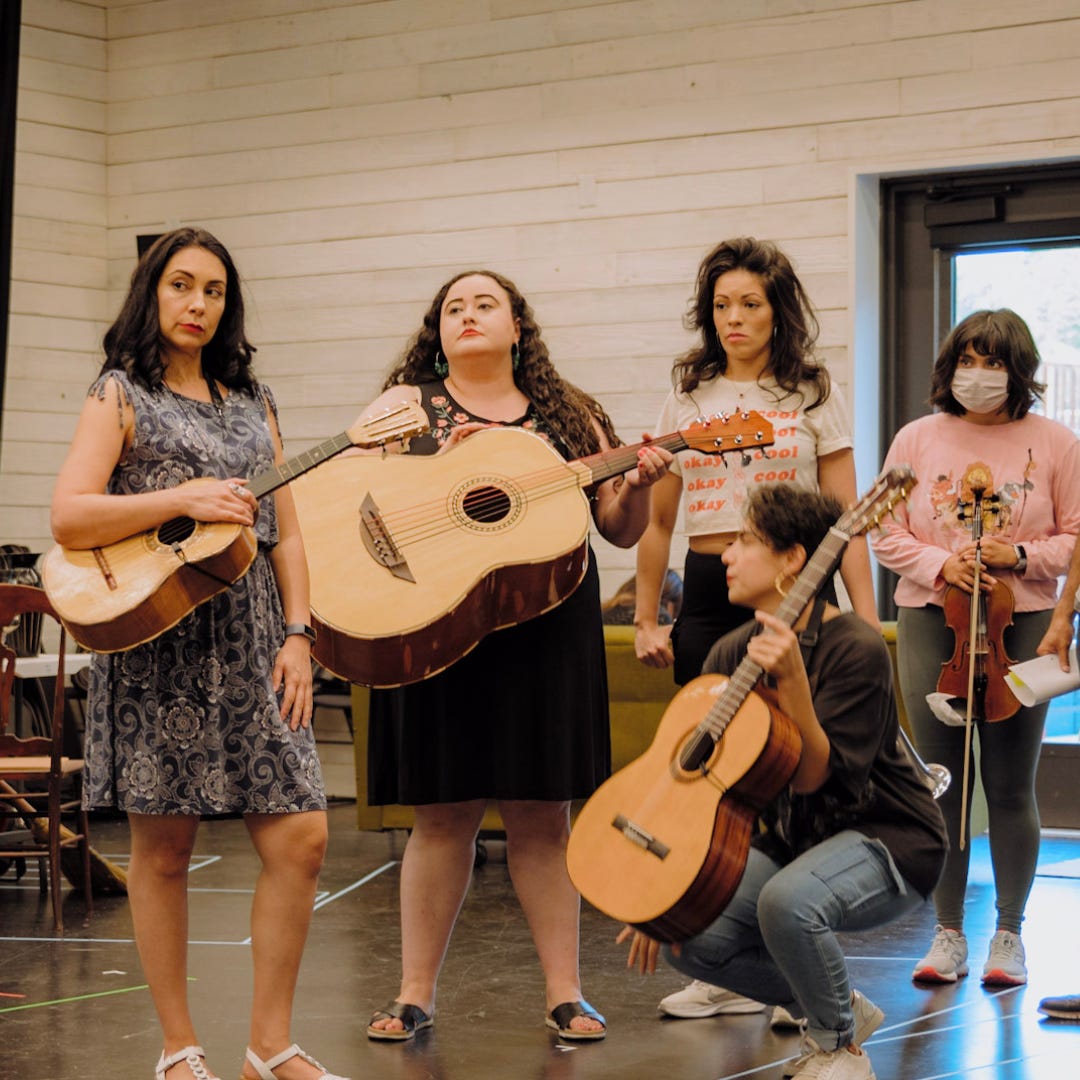
Continued Conversations with Jennifer Ledesma
Description
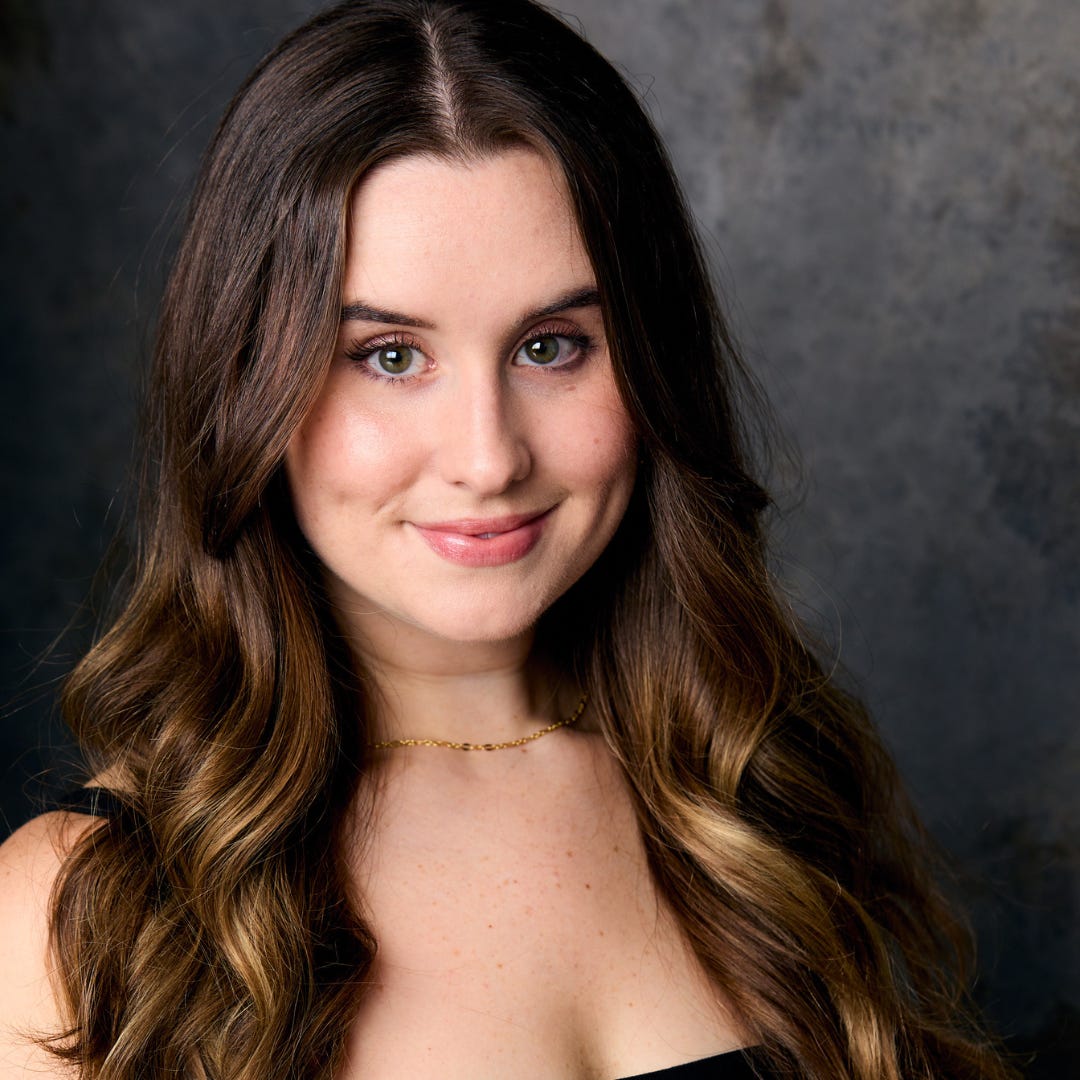
Everyone please welcome Jennifer Ledesma to A Broadway Body: Continued Conversations! Jennifer is an actor based in Chicago. She and I were auditioning in the Chicago theatrical market at the same time back in 2016-2018, and while we’d never booked the same show, we’d always see each other at auditions, in class, and in the community. (If you’re in the Chicagoland area, catch her in a show!)
In our conversation, we discuss…
* How prevalent it is for curvy and plus-size women to not be cast as the leading lady, love interest roles in musical theatre
* Being told to switch majors (away from musical theatre) in college, yet being one of the only working actors from her class
* The complexities of how our bodies and identities show up in the work that we do as actors
* Destigmatizing the BFA
* How Jennifer felt seeing a character breakdown that was meant for her, as a curvy, Latina actor
* How the “F” in BFA ultimately doesn’t matter
* Rediscovering the joy of dance through getting back into a movement practice that felt aligned for her and supportive of her strength and stamina goals
* The juxtaposition of knowing what you want to change about yourself and not hyper-fixating on them and viewing them as imperfections
* Embracing your curves instead of feeling shame for them
Our bodies and identities are so complex. Jennifer reminds us that so much of who we are impacts the work we do as artists. We discussed so many important topics, and Jennifer shared some incredible perspectives on an array of body image-related topics. I cannot wait for you to hear our conversation!
“ I think that just adds a whole other layer to the whole conversation that we’re having about body image and perspective, because I think that’s why I was also really powerful with seeing a show like “Real Women Have Curves” on Broadway. There’s not a lot of spaces were we’re celebrating plus-size women of color, specifically Latina plus-size women, in the industry, and just a specific space for that. It’s such an indescribable feeling, but I would love to see more shows like that representative of those communities and inviting in what makes us special or what makes us unique and inviting us to embrace all those “imperfections” rather than excluding us from an industry in spite of them.”
- Jennifer Ledesma
Megan Gill: Hi, Jennifer. Thanks for being with me today!
Jennifer Ledesma: Hi, Megan. I’m so excited that we’re finally doing this!
Megan Gill: Me too. I can’t wait to chat! Do you wanna just start by introducing yourself and then sharing a little bit about who you are in the work that you do in the world?
Jennifer Ledesma: Yeah my name’s Jennifer Ledesma. My pronouns are she/her. I grew up in Southern California, around the Anaheim, Disneyland area, but now I live in Chicago. I got my Bachelor of Arts degree in Musical Theater, and that’s primarily what I do. I primarily focus on stage acting in the musical theater world. When I was younger, I was training both as a vocalist and as a dancer separately, and it wasn’t until high school, where I was kind of trying to decide which route I wanted to go as a performer, when I went off for college. And then I found theater very late in high school. But that just kind of seemed like, you know, the best place to combine my passions for both.
And then I also play a few instruments. So yeah, and then I ended up moving out here to Chicago for school. And I’m very thankful for that because I probably never would’ve considered Chicago as a place to pursue theater. But I fell in love with it, and I’ve been here ever since. So I’ve been here for over ten years now, which is kind of crazy to think about.
But yeah, I mostly do musical theater, but what I love about Chicago is that I feel it’s really easy to pursue different ventures of the performing arts. So, you know, still performing in film, TV, commercial work. I feel Chicago’s really encouraging of new work too. So a lot of work that I booked coming out of school was a lot of new work. So yeah, that’s a little bit about me in a nutshell.
Megan Gill: I love that, and that’s where we met. We met in Chicago in the theater world. It is such a lovely community and a special, special place to be an artist and to be a creative.
Jennifer Ledesma: Yeah, and I feel with you and me, we’ve never worked together, but I feel we always ran into each other at auditions, and it was always so nice to see a friendly face. And I think that’s something that you really get the sense of in the Chicago theatre community. I feel everyone’s really, you know, advocating for each other as much as possible.
Megan Gill: I agree. It’s very unique and very lovely, and I miss it!
So, in light of what we’re here to chat about today, I’m wondering how your relationship to your body and body image influences how you show up as a performer in auditions, onstage, in these communal spaces.
Jennifer Ledesma: Yeah, I feel that’s such a loaded question and a very complex question to think about, and that’s why I’m so glad that we’re having this conversation. You know, I spoke a little bit about my background. My primary art when I was a kid is I started taking dance classes at the age of five because I have asthma, so my mom wanted me to do something active that wasn’t sports related, so I wouldn’t be out with dirt or whatever. And so I’ve been a dancer from age five through now. And my relationship to my body as a dancer has always been really interesting because I don’t have a typical dancer body. I am a curvy Latino woman. My boobs came in way earlier than a lot of my other friends when I was growing up. And, you know, I would always hear comments when I was preparing for dance recitals of – you know, when they would be fitting costumes on me, and they would make jokes of, like, “Oh, you’re just, you know, a little bit more well-endowed than the other girls.” And you know, it was always light fun, but I think I was definitely conscious about it, and I feel like that definitely probably also had an influence on me knowing that if I did pursue dance over being a vocalist when I was a kid, I knew that I was gonna have a really hard time doing that as an adult just because I didn’t have a dancer body. And I think it has definitely transferred in my life as an actor now.
It’s hard because, you know, I feel, even with my family, my mom is my biggest cheerleader. She’s the most supportive person, but she’s also very conscious about it as well. And I think when I was growing up, she would try to make comments of, “Oh, I’m just trying to make these comments to protect you because I want you to succeed,” which I understand her perspective, but it’s hard because, you know, when you hear your own mother, making comments about your body and that kind of thing. And I think as a musical theater artist, there are definitely times when I do ask myself would I be considered for certain roles if I didn’t look the way that I did?
And I even had this conversation with my agent when he and I have sat down and had check-ins of, “Okay, what’s working? What’s not working?” Because there came a point in my career about a year ago where, you know, I was getting auditions but I wasn’t getting callbacks, or I was getting callbacks but I wasn’t booking the job, or my agent was submitting me for things and we weren’t getting auditions. So part of me wondered because I’ve always gotten comments from people throughout my career here in Chicago.
You know, I started off doing a lot of ensemble work and have kind of worked my way up getting more supporting, leading roles. And I’ll always encounter people who are like, “I didn’t know you could sing like that. Why haven’t we heard you sing more?” And I’ve always kind of wondered would I book more leading lady-type work if I didn’t look the way that I did, you know, if I wasn’t a curvy woman. Because I feel like, especially the musical theater industry, can lend itself really heavily into stereotypes. So being a curvier girl, I feel I’m always pushed towards the best friend type or the comedic type or, god forbid, I’ve been called in for so many, grandma, 40-year-old, 50-year-old-woman tracks, which even in college, they prepped me for that, which is just – it really can do a psyche on yourself because it’s like, “No, I know I’m a 20, 30-year-old woman, and I know I can sing these roles, so it’s disappointing that I’m not being given the chance just because I don’t fit a certain mold.
And so, going back to your question in terms of how I show up, I feel I try not to let it push me down in terms of what I want to go out for. But it’s hard because sometimes I feel like if I’m self-submitting myself for something, I question, okay, do I want to submit myself for the role I think I have the better chance of booking or the better chance of getting an audition for, or do I want to submit for the character that I resonate more with or that I know I could do really well?
I have a pretty wide range as a vocalist. And I have a very upper-soprano register of my voice that my voice teacher is very supportive with. And he’s always like, “I want more people to hear this lovely part of your voice.” But, you know, as a plus-size woman, I just – you know you don’t see a lot of plus-sized women play the Lauries in Oklahoma or the golden age girls. So, and even Gentleman’s Guide, the love interest.
And, you know, going back to the whole comment I made about how it can have an influence on your psyche, it’s like yeah, curvy girls never get to play the love interest or it’s not seen as the norm in musical





 United States
