


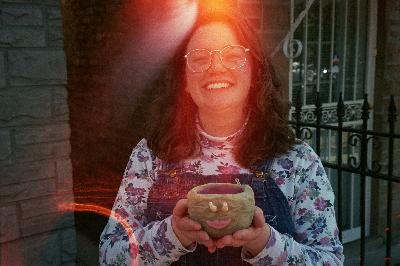
Continued Conversations with Liz J
Description
Everyone please welcome Liz J to A Broadway Body: Continued Conversations! Liz and I were a part of the same university program, so we’ve known each other for quite some time now. I was so excited to bring Liz in for a conversation about body image.
Liz pulled back the curtain on being raised in a musical theatre world and discussed how the beauty and body standards of Broadway impacted her as a teen and into adulthood. She talks about her relationship to dance, body modifications, and bodily agency. This was such an impactful conversation for me to be a part of, and I cannot wait for you to hear it!
In our conversation, we discuss…
* When Liz first started using the phrase “A Broadway Body”
* Richard Simmons Tapes - seeing people in different sizes of bodies dancing for fun
* The impact of the wild ideologies preached to us in musical theatre
* Pursuing what body modifications work for you and respecting others’ bodily agency
* Our thoughts on plastic surgery, aging, body modifications
* Art about the beauty standards, overconsumption, body image, and more
Resources Liz speaks on in our conversation:
* Books:
* Films:
“ I’m thinking about just the experience of the contrast of being a high schooler with a BFA problems Twitter account to then being a college student getting a BFA, I guess I don’t necessarily want to rehash all the wild feedback that a lot of us got in our program, but a lot of us were getting wild feedback that reinforced these ideas that you need to look a certain way to perform and you need to look a certain way to be even worthy of being seen on stage. I didn’t realize that I was thinking about things in those terms until after college.”
- Liz J
Megan Gill: Hi, Liz!
Liz J: Hey, Megan!
Megan Gill: I’m so excited that you’re here today and that we get to chat!
Liz J: Oh, I’m so excited to be here. Yeah, thanks for having me!
Megan Gill: Absolutely! Do you wanna just start by introducing yourself and a little bit about the work that you do in the world?
Liz J: Sure, so I’m Liz J. So Megan and I went to college together. We were in the musical theater world.
Megan Gill: We were.
Liz J: So I have that background and I still very much consider myself a creative person and do a lot of creative work, but I’m not really doing it for money. And I kind of like that setup right now. I have a normal-person job working at a law firm. So I’m mostly making trainings for new attorneys, and it’s a really great job in a lot of ways. And I still am able to be creative.
For example, I’m working on a training right now that I get to design puppets for it. That’s crazy. In what world are puppets at a law firm. But I have a really cool team that I work with, and I feel they see what I’m interested in and take interest in the things that I’m interested in and are very open-minded about what my role can look like. Yeah, I just am lucky to work with people who are also creative.
So, outside job-job, I also do puppetry and I make solo music and I’m in a choir and I make visual art and I write, and I wrote a musical with one of my best friends. Yeah.
Megan Gill: Whoa. Tell me more if you can.
Liz J: I mean it’s a really silly and campy musical, and we wrote the first draft in 2019, which is kind of wild to say because that is now a long time ago. But yeah, we had performance dates set for 2020, and then 2020 happened. So obviously we had to take a step back. And yeah, we weren’t sure when it would be a good time to do an in-person show again. So we kind of put it aside for a while. And then last year we brought it back up and we started working on it again, and we started working on it with Garrett Welch he’s helping us arrange the music, so…
Megan Gill: Cool.
Liz J: Hopefully gonna be producing it soon. It’s been a long journey, but that’s okay.
Megan Gill: Totally okay. This is so exciting, and I’m so excited to hear that you’ve stuck with it this long.
Liz J: Yeah, yeah. I mean, it’s not been consistent this whole time. we’ve kind of put it to the side for good chunks of time, but I think that’s also been good for it, you know? We can live life, do other creative projects, and then we kept wanting to revisit it, which I think says something the fact that we wanted to complete this project.
Megan Gill: Yeah. Agreed. I think that’s beautiful and lovely. It’s had time to breathe. It’s ready.
Liz J: Yeah, word. Exactly.
Megan Gill: Yeah. Okay, cool. I love that. Thanks for sharing all of that stuff. So yeah, we had crossover years at the same college program together. We weren’t in the same year, but whatever. It doesn’t matter because we were still in a lot of the same classes and we were still performing together and in dance together and probably even in scene study at some point. Yeah.
Liz J: Shows, yeah.
Megan Gill: Yes. Shows together, all of that good stuff. So that’s how we met. That’s our origin story. And I think that we met at this time where I was in a very different place in terms of relationship to my body. So I’m curious to hear a bit of your body image story and how your evolution as an actor and a creative and just a human being in general has influenced that.
Liz J: Yeah, so I mean, like I think a lot of young performers, I got bit by the bug early and was really, really passionate about it and really striving, I guess might be the word. I basically from the first time I did a musical in middle school, I just really wanted to do whatever it took to keep doing that. Let’s see. I’m trying to think how exactly to really phrase this.
I really wanted to pursue musical theater really hard, and when I was in high school, I was in a bunch of dance classes and I felt I was kind of playing catch-up because I hadn’t been dancing my entire life. And I think a lot of girls who were raised in the nineties, got a lot of wild feedback about what it meant to – as you’re growing up, what you should look like and what kind of body you’re taught is desirable. So that’s the air we’re breathing, at that time. It was very much a present – it was just incredibly on my mind throughout high school and into college. Thinking about my body is part of this package.
It’s kind of stunning thinking about myself being a teenager, having these thoughts like, “Ooh, I am something to market.” But it really – the teachers that I listened to, their messaging really stuck with me that I was just very much thinking of myself as a commodity from this tender age.
And yeah, when I got to college, it was a lot of also similar messaging. Megan, I’m honestly, I’m thinking about just wild, wild shit that I thought in high school because I’m like it really was – I don’t wanna get on here and trauma dump. That’s not it. I’m not – I don’t wanna be like, “Here are all these crazy things that were said,” but I do wanna demonstrate, like, okay, it really was so present.
I had all these friends that I was doing theater with in high school, and we had a satirical Twitter account called “BFA Problems.” We were high schoolers. We were not pursuing a BFA, but it was like we had a Twitter account and the icon was a LaDuca and we were just tweeting all this stuff about, about literally saying the phrase “Broadway body” in Tweets as high schoolers, you know? I’m 15, and we were deep in it. And one of my other very good friends who also went on to go to college for musical theater, he and I would do P90X in the morning.
Megan Gill: In high school.
Liz J: We were 16! That’s wild. You know? And so, it was just on my mind from an early – it’s early. That is an early age. That’s kind of wild thinking about a teenager thinking of – yeah.
Megan Gill: Hyper-fixating on bodies in this way. Yeah, agreed.
Liz J: Yeah.
Megan Gill: Agreed because as kids we’re so active, and a lot of kids play a sport or maybe have an afterschool activity. And so we do these things and there’s a long time of your childhood where you don’t even think twice about how much you’re moving your body. And then there comes a point, and for me it was high school as well, where I realized, “Oh, you mean I can move my body in this certain type of way or this much, and it can then look potentially a different way than it does now? And I don’t what I look like right now because all these messages tell me I shouldn’t look what I look right now.” It’s that moment that forever changes you. And I feel when that moment happens so early, even in high school, when our brains are not deve








 United States
