



Continued Conversations with Kacie Patricia
Description
Trigger Warning: This conversation contains discussion of eating disorders, body dysmorphia, and weight loss drugs. There is a lot of nuance in our conversation around cultural conditioning of weight gain stigma and the stigma of weight loss drugs. Please take care of yourselves as you listen and avoid if these topics might be triggering for you.
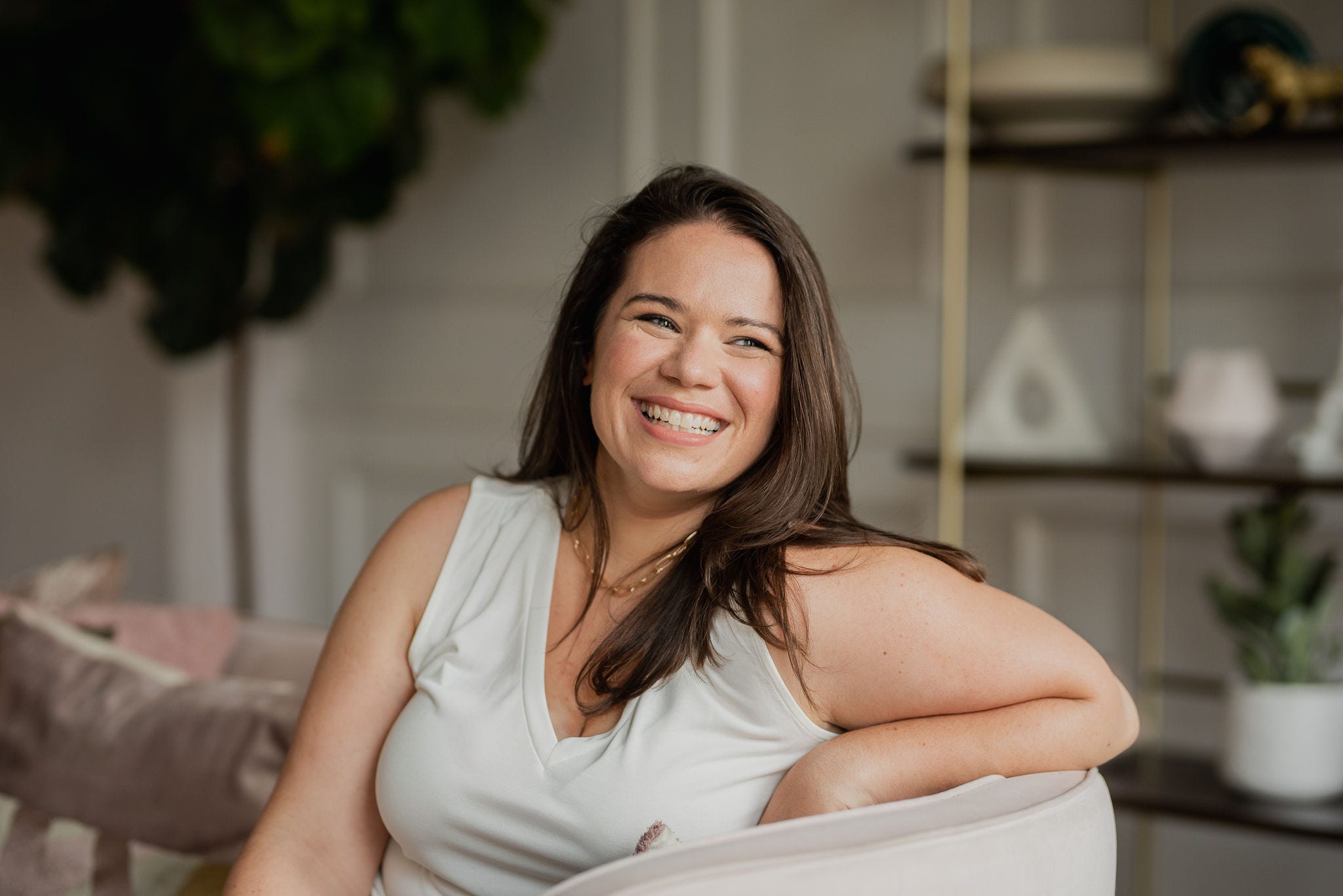
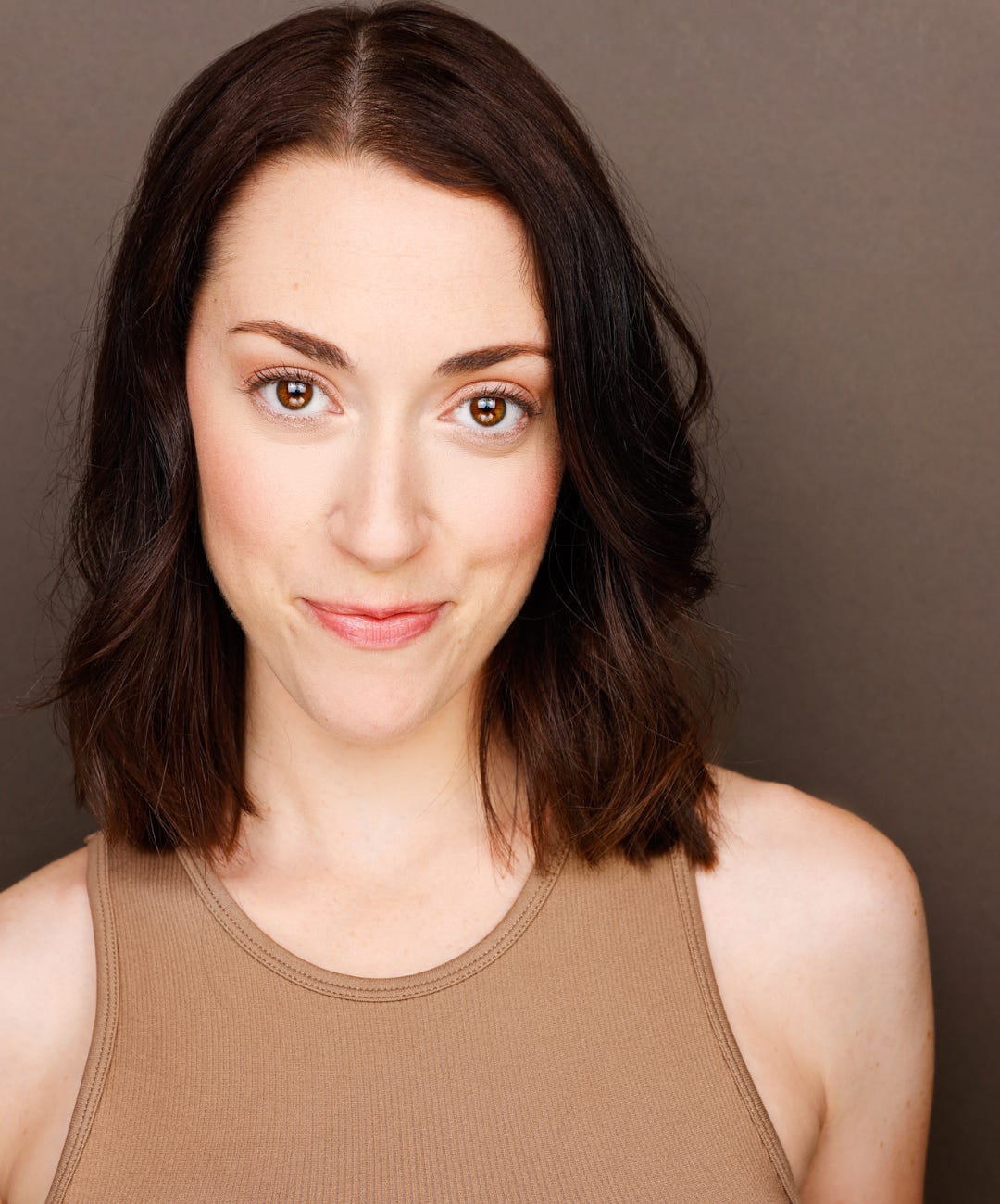
Everyone please welcome my dear friend and fellow actor Kacie Patricia to A Broadway Body: Continued Conversations! Kacie and I met at Crash Acting and instantly hit it off. She’s an insanely talented actor, a sweet angel of a human being, and I can’t wait for you to hear her story.
In our conversation, Kacie opens up about her body image story and how seeking weight loss drugs pulled her out of a toxic, all-or-nothing body image cycle. Her vulnerability to share about her journey was so brave, and I feel so grateful to have a space where my guests feel safe enough to open up about some really tough topics. Kacie walked us through her story from when she was young until now. She shares about how her all-or-nothing mentality sabotaged how she’s previously tried to care for her body, and she opens up about how her past silent suffering, shame cycles, and how her journey of seeking weight loss medication has forced her to open up and talk about her body image struggles.
Kacie’s vulnerability opened my eyes and my heart, and I hope hearing her story does the same for you.
“ All we can do is just keep talking about it and just trying to change it and giving ourselves safe spaces to talk to each other about it. Because it’s felt really, really, really healing for me, this conversation specifically, but just this past year in therapy and the journey that I've gone on. I healed a part of myself that I did not know needed to be healed, or I started to at least. We’re never fully healed. But those insecurities will always be there.”
- Kacie Patricia
Kacie Patricia: When I think about my body image, the word impossible comes up. I feel like I've had an impossible relationship with my body for literally as long as I can remember. I probably wanna say it started in middle school, even before. But when I think about it, it's interesting because I'm like, well, I never had anybody tell me that I was fat or looked different. It's society that makes you feel that way. It's like I was never told or felt a certain way, you know? I don't know. I'm trying to pinpoint in my mind the moment where I was like, “Oh, I don't feel good about myself,” or “I don't look like my friends,” or “I don't look like this person,” or “How do I look like this person?” and there really isn't a moment, but there’s obviously magazines and TV and all the girls that I looked up to as a kid and friends.
And so, when I think about when I was younger, some of the big moments that stand out were my mom would always look at herself in the mirror and grab her stomach or the sides of her body and be like, “Oh my god, I'm so fat. Oh my god, I'm so fat.” And I would see that and I never said anything. I never really said anything until I was older. But that was really detrimental to the way that I was thinking about myself as a tween.
Megan Gill: Like the witnessing of that over and over again.
Kacie Patricia: The witnessing of that.
Megan Gill: Of what it subconsciously does to you kind of thing?
Kacie Patricia: Yeah, exactly. And I remember my best friend in middle school had a really, really, really intense relationship with her body. And she would not eat for days, and she would go to the gym and run on the treadmill for hours and burn thousands of calories at a time. And she would go to these really, really extreme lengths for days at a time to try to achieve this body. And she always talked about how she thought she was so fat or she can't eat this today, or she can eat this next week or not today. And I just remember I personally never felt like I wanted to do those things to myself. But seeing how intense it got for her, I was like, “Oh my God. If she feels this way about herself, how should I be feeling about myself? Oh my God. Something is going on here.” But also we were kids, so it was just like we weren't thinking about it that deeply, you know? It was just kind of like, “This is intense, but, you know, we're in middle school, so.”
But yeah, it was really, really, really intense. And she was my closest friend from like seventh, eighth, ninth grade. And then I remember kind of realizing as we got older that she was just bigger boned, you know? Her body wasn't made to be so tiny, and she was working towards this body that she was never gonna be able to achieve most likely without starving herself and making herself sick. And it was really, really sad to see. Looking back, I haven't thought about this in like a really long time, actually. I hope she's doing well, and I hope that she's worked on that relationship and it's really, really sad to think about how intense she was feeling and these extreme lengths she was going to at such a young age. We were, like, 12, 13 years old. I think I remember telling my mom about it and my mom feeling really bad, but it definitely started making me think about myself more.
I remember she was just a little bit bigger than me. She was taller than me. She always had a flat stomach and a proportionate body. It was just like her legs were a little bit bigger and her shoulders were a little bit broader. She was just a little bit bigger. That was it. And I think I always was smaller, and maybe she thought she was trying to achieve the way I looked or our other friends looked, when it was just like never gonna happen for her. And it was just really, really, really sad to think that was happening at such a young age.
Kacie Patricia: But for me, I think the biggest issues for me have always been I’ve never had a flat stomach my entire life.
Megan Gill: Girl, can I relate with you on that?
Kacie Patricia: Never, and I've always thought, “Okay, there's something wrong with me. Everything else looks okay. But this is a part of me that I just cannot figure out.”
Megan Gill: Yeah. Right, “Why me? Why do I have this bump when all my friends –.” Ever since I was a kid, ever since I was a child I've always had it. It's always been with me, and looking at my friends’ stomachs and being like, “Well, wait. I don’t get it! The math isn’t mathing!”
Kacie Patricia: Yes. Right. The math isn't math thing at all. Yeah, now I'm thinking about things that I haven't thought about in a while that I guess I did go to some extreme lengths starting in, like, eighth grade, freshman year of high school.
I remember when this friend specifically, we were starting to talk to boys. It was when I had my first kiss that summer, and then all of a sudden we were like going to each other's lake houses and like wearing bikinis, but I didn't feel comfortable in a bikini, and I was like, “Okay, now I have to do something about this.” My body was starting to form and fill out, and then all of a sudden I wanted to look good for boys and whatever.
And I remember the summer going into freshman year of high school, I decided that I wasn't going to eat and that I was gonna come home off the bus and run, like, a mile before my parents got home, so they didn't know that I was doing it. For me, it was always silent suffering. It was like nobody could know that I felt this way about myself. That's literally how it's been up until this year of my life, to be honest. It's like nobody could know that I'm insecure about this. If I never talk about it, nobody will ever know. Nobody will ever think anything.
Megan Gill: And it'll just magically change and then that’s that.
Kacie Patricia: Exactly. Yeah, and in a way, the silent suffering was just a way of pretending it wasn't really there and not acknowledging it. And so, I didn't realize how much it was really affecting me until much later in life.
But yeah, I remember this one summer I was not eating and running when I got home from school, and then that was not working for me. I literally maybe did a couple days, and then I was like, “I can't do this anymore. This is not sustainable,” and then I would go right back to just regular life. And that was kind of a cycle that went on for the next five/ten years of my life. It was just like something would make me feel really bad about myself, and then that day I would decide, “Okay, I'm not gonna eat,” or “I'm going to eat just one thing, and then I'm gonna exercise so much, and I'm gonna do that for the next however long it takes, and if I just do that, then I'll be good. Then I’ll be good.”
Megan Gill: “Then I'll like my body, and I'll like the way I look, and I will be better and therefore worthy.” Like, all of those types of thoughts that pop up for you?
Kacie Patricia: Mm-hmm. Yes. “If I could just do this one thing, then everything would be better, and then I'll feel good about myself, and I won't have to worry about it,” thinking it was so simple. It was never sustainable for me. I never was able to commit to doing anything like that for longer than, like, a day or two. Yeah, never longer than that. And for that reason, I think I always told myself, “You're fine. You don't have an eating disorder. You don't have these things. Think about people who are starving themselves and making themselves throw up all the time. You've never done that, so you're just like everybody else.”
And so, I think I like sort of gaslit myself into thinking that this was just normal behavior and normal thoughts to have. And tha












 United States
